

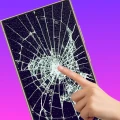
Haha Broken - Broken Screen
Easy Technology Global
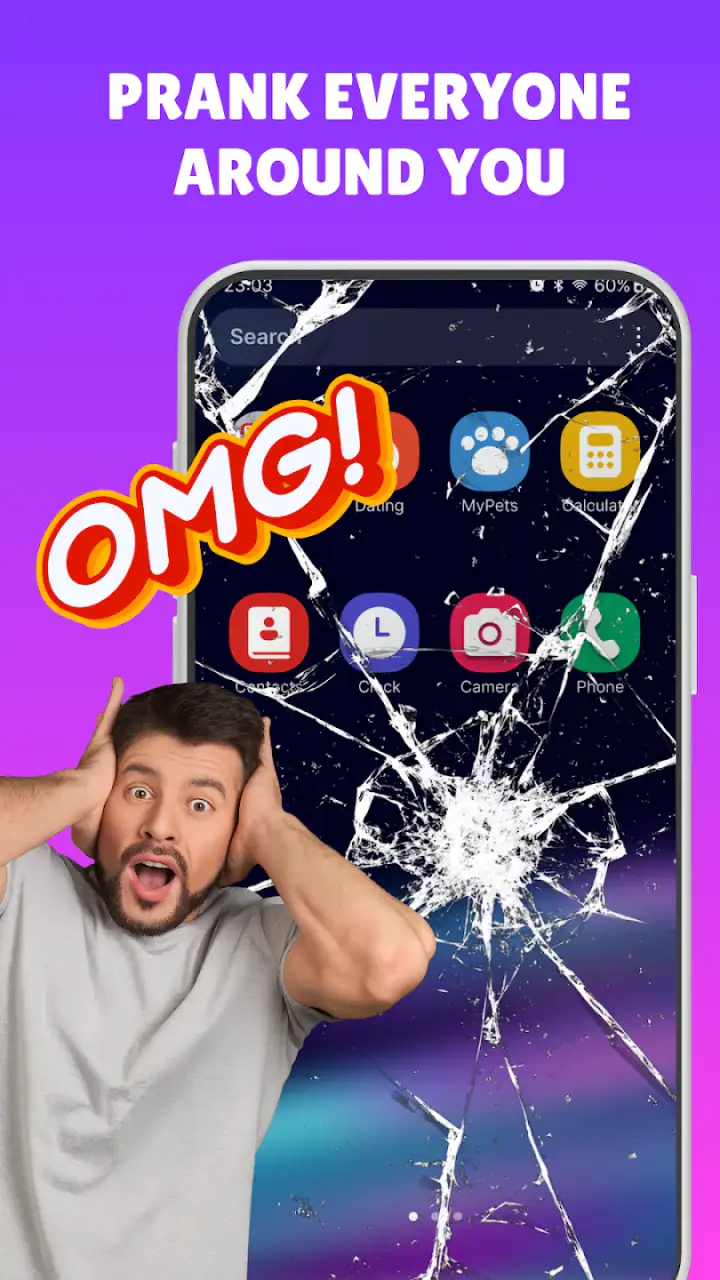
I tried Haha Broken - Broken Screen as a lighthearted personalization app, and its appeal is easy to understand: it turns the phone display into the setup for a harmless-looking broken-screen prank. It is free, aimed at Teen users, and made by Easy Technology Global. The basic idea is much narrower than a normal wallpaper or customization tool, so the right question is not whether it can replace a full personalization suite. The better question is whether you want a quick visual gag that can be prepared in moments.
That distinction matters because this app is built around a single reaction. If your goal is to make a friend briefly believe the phone has cracked, the focused approach works in its favor. If you want long-term home-screen styling, icon packs, widgets, or a large library of everyday backgrounds, you will probably be happier with a conventional wallpaper or launcher app. I found the most useful way to judge it was to look at the situation in which I would actually open it, rather than treating it like a permanent phone setting.
How I Decided Whether It Was Worth Keeping
The first test is the audience, not the visual effect
Before using a broken-screen effect, I would think about the person on the receiving end. A quick joke among friends can be funny, but the same image could cause unnecessary panic if someone depends on the phone for work, travel, banking, or an urgent call. The app is best when everyone involved understands that playful teasing is acceptable. I would avoid using it with a stranger, a child who may become distressed, or anyone whose device damage would create real anxiety.
The Teen content rating is a useful reminder that this is not a tool I would hand to very young users without context. The effect itself is simple, but the reaction depends entirely on how it is presented. I prefer using it as a short reveal: show the screen, allow a moment of confusion, and explain the joke quickly. Leaving someone worried for too long turns a harmless visual trick into a poor interaction.
What I look for in a prank utility
For this kind of app, I care about speed more than depth. I want to know whether I can prepare the display without a long learning process, whether the result is convincing from a normal viewing distance, and whether I can return the phone to its usual appearance without creating confusion. A prank app that takes too much setup loses much of its value because the opportunity often happens spontaneously.
Latest News
Uber Eats Under Pressure: What Happens When Delivery Goes Wrong
How QR & Barcode Scanner Adapts to Android and iOS Innovations
Why Waze Navigation & Live Traffic Is Your Essential Travel Companion
CapCut Mastery: Unleash Hidden Features for Pro-Level Editing
How OS Updates Enhance Roblox Adventures
Teacher Simulator: Exam Time Turns Quick Classroom Judgments into a Repetitive Loop
I also consider how well the effect fits the phone. A crack image that looks believable on one screen may look less convincing on another because of different proportions, brightness, or screen layout. That is an important trade-off: the app provides the concept, but the quality of the joke still depends on the way the display is viewed. I found that a dimmer room and a quick glance from an angle can make a static effect feel more plausible than presenting it under bright light and close inspection.
Its position in the personalization category
Although it sits in the personalization space, I would not compare it directly with a full wallpaper collection. Those apps are designed to stay useful every day, while this one is more like a temporary visual layer for a specific moment. That makes the decision fairly clear. Choose it for a short-lived screen illusion; choose a standard personalization app if you want a phone that feels different every morning.
The store listing shows an average rating of 4.5 from around 17 thousand ratings, and the app has passed 5 million installs. That level of adoption suggests that the simple prank format has broad appeal, but popularity does not change the central limitation: it is a focused novelty rather than a complete customization system.
Gallery
Where the experience feels strongest
The strongest point is the immediacy of the idea. I do not need to learn a complicated editing workflow to understand what the app is trying to do. A realistic broken display is recognizable at a glance, which is exactly what a visual prank needs. The result is also easier to explain to another person than a complicated joke involving several apps or settings.
Another advantage is that it can fit into an ordinary situation. Imagine a friend leaves a phone on a table while asking you to check something. Instead of changing accounts, sending messages, or touching private information, you can use a display effect as a brief visual setup and then reveal it. That is a better boundary than pranks that interfere with calls, notifications, or personal data. I would still ask permission before handling someone else’s phone, but the concept itself can stay limited to what is visible on the screen.
The best use is a short, controlled visual joke that does not alter the owner’s content. That is where this app has a meaningful advantage over more invasive prank ideas. It can create a reaction while keeping the joke centered on appearance rather than on someone’s files, contacts, or conversations.
Three practical ways to make the effect work better
- Use the phone’s normal context. A broken-looking display is more convincing when the device is shown in the same place and lighting where the owner normally uses it. A dramatic presentation can make the trick obvious.
- Keep the reveal close. I would prepare the effect shortly before showing it rather than leaving it active for a long period. This reduces the chance that the owner tries to use the phone for something important while the joke is still running.
- Plan the exit first. Before starting, I would know how to return to the regular screen. This is a small but important workflow improvement: the prank should end as cleanly as it begins, especially if the phone belongs to someone else.
These details are not glamorous, but they make a bigger difference than simply choosing the most dramatic image. The success of a broken-screen joke depends on timing, viewing angle, and a quick recovery. Treating the app like a small performance rather than a permanent theme produces a better result.
What I would not expect from it
I would not install this expecting a complete phone makeover. The app’s identity is tied to the broken-screen effect, so it is not the right choice for people who want coordinated wallpapers, lock-screen design, icon changes, or a broad set of visual tools. Even if the effect looks convincing, novelty naturally fades after a few uses. That is not a flaw for its intended audience, but it is a reason to keep expectations realistic.
I would also avoid relying on it for a serious demonstration of screen damage. A visual effect is not a diagnostic tool, and it should never be used to decide whether a real display needs repair. If a phone is genuinely cracked, flickering, or unresponsive, the correct response is to inspect the hardware and protect the owner’s data, not to compare it with a prank image.
When another type of app is a better fit
A wallpaper app is better if you want a change that remains useful after the first day. It can refresh the appearance of the phone without requiring a joke or a special audience. A launcher or icon-customization tool is a better fit when you want to change how the whole interface feels. Those alternatives may involve more setup, but the effort has continuing value.
A photo editor is preferable when the goal is to create a custom damaged-screen image for a video, a poster, or a controlled visual project. It offers a broader creative process, although it is less convenient for a quick prank. A screen-testing or repair utility is the right category when you are investigating a real hardware problem. I would not substitute this app for any of those purposes simply because the visual theme is similar.
The comparison is therefore about convenience versus flexibility. This app wins when I want a ready-made concept with minimal preparation. Broader tools win when I need control, repeatable design work, or a result that will be used beyond a single joke. There is no reason to switch from a normal customization app unless the broken-screen scenario is specifically what I want.
What switching actually costs
Because the app is free, the main cost is not money. It is attention, storage space, and the small amount of time needed to prepare and remove the effect. That makes trying it relatively easy for someone curious about the idea. The more important cost is social: a badly timed prank can damage trust even when the app itself works exactly as intended.
There is also a practical cost to choosing a novelty app over a daily personalization tool. Every app on a phone competes for space and attention, and an effect used once may not justify staying installed indefinitely. My approach would be to keep it while I have a specific use in mind, then remove it if I stop using it. That is more sensible than treating a temporary prank tool as part of the phone’s permanent design.
The current version is 1.3.1, and it supports devices running Android 7.0 or later. For someone using an older compatible Android phone, that broad system requirement makes the app easier to consider than a tool restricted to recent devices. Still, compatibility alone does not make it universally suitable; the real decision remains whether a broken-screen illusion has a place in your routine.
Who should install it
I would recommend it to someone who enjoys brief, visual jokes and wants a simple way to create a cracked-display illusion without editing an image manually. It is especially suitable for casual use with friends who appreciate this kind of humor and for people who understand that the effect should be temporary. The free price also removes the usual hesitation around testing a novelty app.
It can be useful for a small demonstration, too. For example, someone making a short social video about phone care might use a broken-looking display as a visual opening before explaining how to protect a real screen. In that setting, the effect supports the message without requiring a complicated production process. I would clearly label the image as fictional if other people might mistake it for genuine damage.
Who should skip it
I would skip it if I wanted a polished, permanent personalization setup. I would also skip it if I dislike prank apps, need a tool for actual screen diagnostics, or regularly lend my phone to people who might misunderstand the display. Anyone who uses their phone for time-sensitive work should be cautious about leaving a deceptive screen active, even for a short period.
Parents and guardians may also want to set expectations before a younger user experiments with it. The important lesson is not simply how to make the screen look damaged, but how to avoid causing fear, interrupting someone’s work, or creating confusion about a real device problem. Used with that judgment, the app stays within the boundaries of a harmless visual joke.
My recommendation after using it
I see Haha Broken - Broken Screen as a narrowly useful but clearly defined app. It does not need to become a daily habit to justify itself. Its value comes from being ready when a specific playful moment appears, and its simplicity is more of a strength than a weakness in that situation. I would choose it over a photo editor for a quick setup, but not over a normal wallpaper app for everyday customization.
My advice is to install it when you have a clear, respectful use case, test the effect on your own phone first, and decide how you will restore the regular display before involving anyone else. Keep the joke brief, avoid situations where the owner may need the phone urgently, and never present the effect as evidence of real damage. Those steps make the experience more enjoyable and prevent the app’s central visual trick from creating an actual problem.
For a free personalization app with a Teen rating and a focused purpose, it has earned its place as a casual novelty. Easy Technology Global has kept the concept easy to understand, and the large install base shows why this kind of quick visual gag attracts attention. I would recommend it to the right person, with one condition: choose it for a moment, not as a replacement for the tools you use to personalize your phone every day.
FAQs for Haha Broken - Broken Screen
What is Haha Broken - Broken Screen and how does it work?
Haha Broken - Broken Screen is a prank app designed to simulate a cracked or broken screen on your device. Once activated, the app overlays realistic broken screen effects that give the illusion of a damaged screen. This is purely a visual effect and does not actually harm your device.
Is Haha Broken - Broken Screen safe to use on my device?
Yes, Haha Broken - Broken Screen is safe to use. The app does not cause any physical damage to your screen or device. It operates as a visual overlay and can be easily deactivated without any lingering effects on your phone's functionality or performance.
Can Haha Broken - Broken Screen affect my device’s performance?
No, Haha Broken - Broken Screen does not affect your device’s performance. It runs as a lightweight overlay, ensuring that it does not consume significant resources or battery life. You can enjoy the prank without worrying about slowing down your device or draining its battery.
Is Haha Broken - Broken Screen available for both Android and iOS?
Currently, Haha Broken - Broken Screen is available for Android devices. Users can download it from the Google Play Store. It may not be available on iOS at the moment, so iPhone users should check the App Store for similar prank apps.
How can I uninstall Haha Broken - Broken Screen if I no longer want it?
Uninstalling Haha Broken - Broken Screen is straightforward. For Android users, simply go to Settings > Apps > Haha Broken - Broken Screen, and select 'Uninstall.' This will remove the app from your device without affecting any other applications or data.
Pros
- Realistic screen cracking effects.
- Easy to use interface for all ages.
- Variety of prank options available.
- Lightweight app
- quick to download.
- Doesn't drain battery excessively.
Cons
- Contains ads that can be intrusive.
- Limited customization of effects.
- No support for older device models.
- Pranks may not work on all screens.
- Lacks frequent updates for new features.


